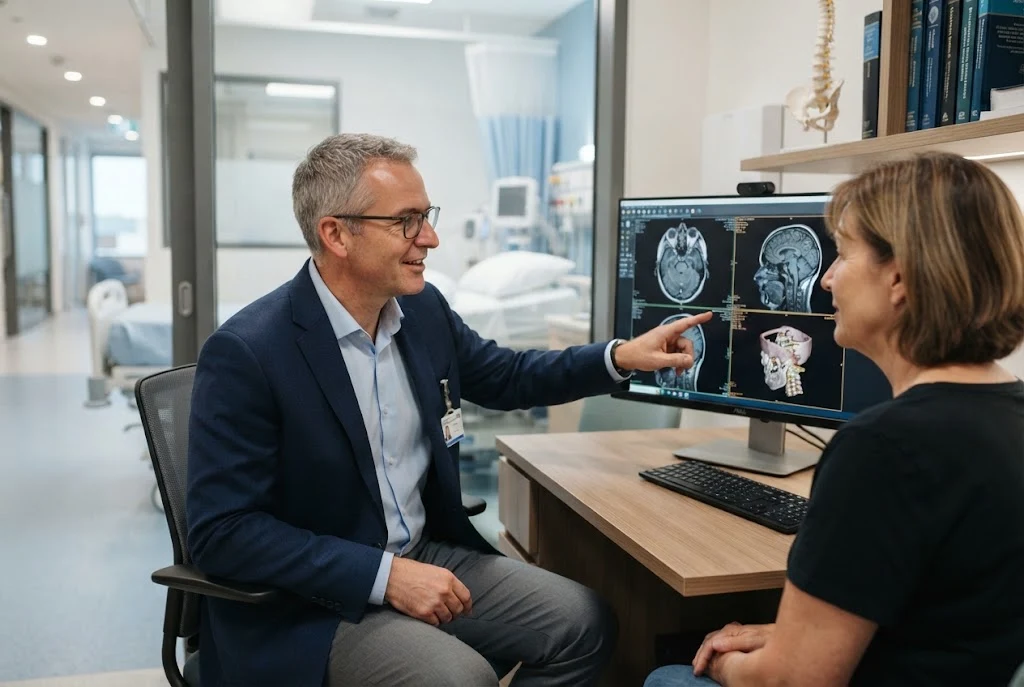
His professional background combines medical education at the University of Utah School of Medicine, neurosurgical residency training at the Barrow Neurological Institute, and long-term clinical practice. This article explores Dr. Maughan’s education, specialties, professional experience, and the areas of neurosurgical care associated with his practice.
Who Is Peter Maughan, MD?
Peter H. Maughan, MD, is a neurosurgeon practicing in Utah. His current professional profile describes him as board-certified in neurosurgery with more than 20 years of experience caring for patients with complex neurological and spinal conditions.
His clinical interests include surgical and radiosurgical treatment involving brain and skull-base tumors as well as complex spinal conditions related to tumors, trauma, and degenerative disease. His practice therefore covers a broad range of neurosurgical problems rather than being limited to a single type of spinal condition.
Dr. Maughan’s professional profile is also connected with Neurosurgical Associates, where his listed practice locations include Murray and Park City, Utah.
Peter Maughan MD’s Medical Education
A physician’s educational background provides important context for understanding their professional development. Dr. Maughan earned his medical degree from the University of Utah School of Medicine in 2002.
Before completing his neurosurgical training, he undertook a surgical internship at Banner Good Samaritan Medical Center. He then completed neurosurgical residency training at the Barrow Neurological Institute at St. Joseph’s Hospital, finishing his residency in 2009.
This combination of medical school, surgical internship, and specialized neurosurgical residency established the foundation for his later clinical work in neurological surgery.
Specialization in Neurosurgery
Neurosurgery is a highly specialized medical field involving the surgical management of disorders affecting the nervous system. Depending on the condition, neurosurgeons may treat problems involving the brain, spinal cord, nerves, skull, or spine.
Dr. Maughan’s professional profile specifically highlights complex spine conditions as well as brain and skull-base tumors. His work therefore includes both cranial and spinal areas of neurosurgical care.
Complex Spine Conditions
Spinal disorders can range from degenerative conditions to traumatic injuries and tumors. Complex cases may require detailed imaging, careful diagnosis, multidisciplinary evaluation, and consideration of both surgical and nonsurgical approaches.
Dr. Maughan’s listed expertise includes complex spinal conditions associated with tumors, trauma, and degenerative disease. The appropriate treatment for an individual patient depends on the diagnosis, symptoms, imaging findings, overall health, and other clinical factors.
Brain and Skull-Base Tumors
Dr. Maughan also specializes in the surgical and radiosurgical treatment of brain and skull-base tumors. These conditions can be particularly complex because tumors may develop close to important neurological structures.
Management can involve different specialties and treatment approaches. Depending on the individual diagnosis, care may involve observation, surgery, radiosurgery, radiation treatment, or other therapies determined by the patient’s medical team.
A Career Built Around Specialized Neurological Care
Dr. Maughan’s career reflects a long-term focus on neurological surgery. His professional profile states that he has practiced for more than 20 years, giving him extensive experience within the specialty.
His training at the Barrow Neurological Institute is another significant part of his professional background. The residency provided specialized training in neurological surgery before he moved into long-term clinical practice.
For patients researching a neurosurgeon, understanding this type of training can provide useful context. However, a physician’s suitability for a particular case should always be determined through an individual medical consultation rather than based solely on a professional biography.
Patient-Centered Communication in Neurosurgical Care
Neurosurgical decisions can involve complex medical information, potential benefits, possible risks, recovery considerations, and alternative approaches. Clear communication between a patient and medical team is therefore an important part of the treatment process.
Patients considering neurological surgery can benefit from understanding their diagnosis, asking what treatment options are available, discussing expected recovery, and clarifying what additional tests or consultations may be necessary.
Questions can also help patients understand whether surgery is recommended immediately, whether conservative treatment is appropriate, or whether additional evaluation is needed before making a decision.
Why Specialized Neurosurgical Training Matters
Neurological surgery requires extensive education and hands-on specialty training because conditions involving the brain, spinal cord, and spine can be medically complex. Residency training provides physicians with experience evaluating and managing a wide range of neurological surgical conditions.
For Dr. Maughan, his educational path included medical school at the University of Utah followed by surgical and neurosurgical training. His current professional profile also lists American Board of Neurological Surgery certification.
These credentials are useful pieces of information for patients researching a specialist, although they should be considered alongside the patient’s specific diagnosis, treatment needs, and consultation with qualified healthcare professionals.
Locations and Clinical Practice
Current provider information lists Dr. Maughan with Neurosurgical Associates in Utah. His professional profile identifies a Murray office and a Park City location, while Intermountain Health lists his clinical affiliation with Intermountain Medical Center and LDS Hospital.
Because healthcare locations, schedules, affiliations, and appointment procedures can change, patients should verify current information directly with the provider before traveling or arranging an appointment.
What Patients May Want to Discuss During a Neurosurgical Consultation
A consultation is an opportunity to understand a diagnosis and discuss possible treatment pathways. Depending on the reason for the visit, useful questions may include:
- What is causing the symptoms?
- What do the available imaging studies show?
- Are there nonsurgical treatment options?
- What is the purpose of the proposed procedure?
- What are the potential risks and benefits?
- What would recovery involve?
- Are additional tests or specialist consultations needed?
- What symptoms would require urgent medical attention?
Patients should also provide their complete medical history, current medications, previous procedures, and relevant imaging or test results when requested by their healthcare team.
Researching a Neurosurgeon Before Treatment
Choosing a specialist for a complex neurological condition is an individual healthcare decision. Patients can research a physician’s education, board certification, specialty areas, hospital affiliations, and clinical focus before scheduling a consultation.
It can also be useful to distinguish between general online information and information that applies specifically to an individual’s condition. A physician’s profile can explain professional qualifications, but it cannot determine whether a particular procedure is appropriate for a specific patient.
For additional health-related reading on MindPulseEdge, readers can explore comprehensive healthcare services and patient care, accessible healthcare and pharmacy services, and health and wellness resources.
The Broader Role of Neurosurgical Expertise
Modern neurosurgical care extends beyond the operating room. Diagnosis, imaging, treatment planning, postoperative monitoring, rehabilitation, and communication between specialists can all contribute to a patient’s overall care pathway.
For conditions involving the spine, brain, or skull base, the treatment plan may differ significantly from one patient to another. Factors such as the underlying disease, location and severity of the condition, symptoms, previous treatment, and overall health can influence the recommended approach.
This individualized nature of neurological care is why professional expertise should be combined with patient-specific clinical evaluation.
Frequently Asked Questions About Peter Maughan MD
What is Peter Maughan, MD’s specialty?
Dr. Peter H. Maughan is a neurosurgeon specializing in neurological surgery, with professional expertise that includes complex spine conditions and brain and skull-base tumors.
Where did Peter Maughan, MD attend medical school?
Dr. Maughan earned his medical degree from the University of Utah School of Medicine in 2002.
Where did Dr. Maughan complete his neurosurgery residency?
He completed his neurosurgical residency at the Barrow Neurological Institute at St. Joseph’s Hospital.
What conditions does Dr. Maughan specialize in?
His professional profile highlights complex spinal conditions, including conditions related to tumors, trauma, and degenerative disease, as well as brain and skull-base tumors.
Is Peter Maughan, MD board-certified?
Yes. Current professional information identifies Dr. Maughan as board-certified in neurosurgery, with certification through the American Board of Neurological Surgery.
Where does Peter Maughan, MD practice?
Current provider information lists Dr. Maughan with Neurosurgical Associates in Utah, including a Murray location and a Park City location. Patients should verify current office information before scheduling.
Should patients use an online article to decide on surgery?
No. Online information can help patients prepare questions and understand general concepts, but decisions about surgery or other medical treatment should be made with qualified healthcare professionals who have evaluated the individual patient.
Conclusion
Peter Maughan, MD has built a long career in neurological surgery, with a professional focus that includes complex spinal conditions and brain and skull-base tumors. His background includes medical education at the University of Utah, surgical training at Banner Good Samaritan Medical Center, and specialized neurosurgical residency training at the Barrow Neurological Institute.
For people researching neurosurgical care, his education, board certification, specialty focus, and clinical affiliations provide useful background information. At the same time, neurological conditions are highly individual, so professional credentials should be considered alongside a patient’s specific diagnosis and a direct consultation with an appropriate medical team.
Anyone researching Dr. Maughan or another neurosurgical specialist should verify current practice information and discuss their individual medical circumstances directly with qualified healthcare professionals.