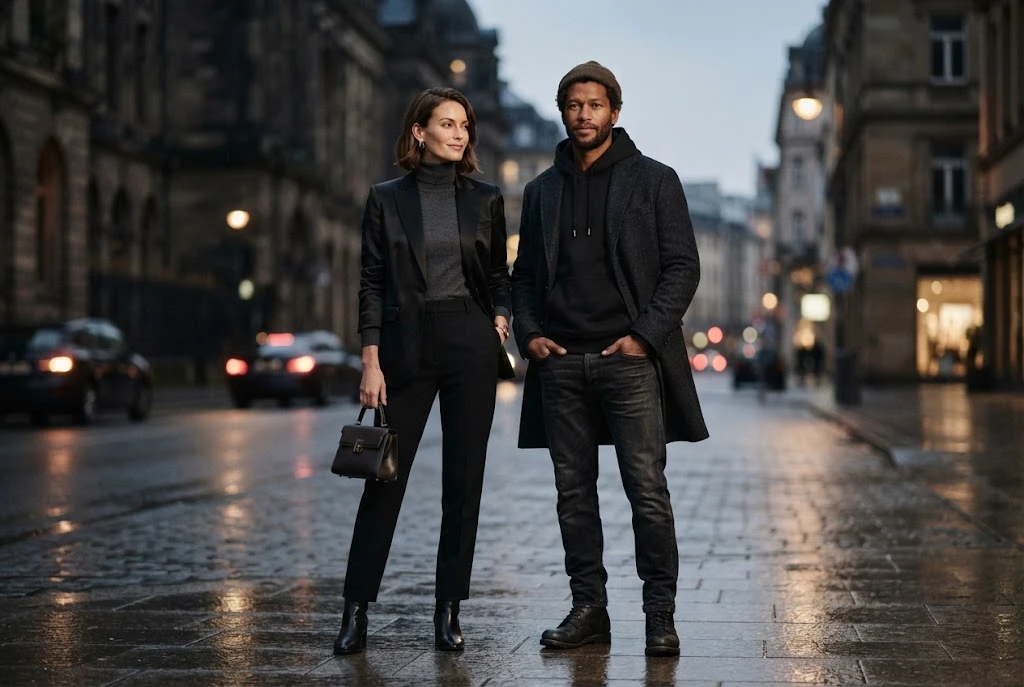
But the appeal goes deeper than a dramatic pairing. The beauty-and-the-thug archetype can also be examined through ideas of identity, power, desire, rebellion, personal style, and the way modern audiences respond to characters who challenge conventional expectations.
What Does “Beauty and the Thug” Really Represent?
At its simplest, the phrase describes a contrast between refinement and toughness. “Beauty” can represent elegance, appearance, confidence, sophistication, or social desirability, while “the thug” can symbolize rebellion, street influence, risk, aggression, or a refusal to follow conventional rules.
That contrast creates narrative tension. Instead of presenting characters who share the same values and personality, the story places opposing qualities together and asks what happens when attraction, ambition, power, and social expectations collide.
The concept does not have to describe a literal criminal or violent character. In modern storytelling, “thug” can function as an archetype representing someone with a hard exterior, unconventional identity, rebellious attitude, or reputation for operating outside traditional social boundaries.
Why Opposites Create Such Strong Storytelling
Stories built around contrast are often easier to notice because the characters immediately create questions. Why are these two people attracted to each other? What do they see that others cannot? Can trust develop between people with very different backgrounds? And what happens when desire conflicts with personal values?
These questions give the narrative room to explore emotional complexity rather than relying only on physical attraction.
- Contrast: Different personalities create immediate dramatic tension.
- Curiosity: Audiences want to understand why the characters connect.
- Conflict: Opposing lifestyles naturally create obstacles.
- Transformation: Relationships can challenge established identities and assumptions.
- Unpredictability: The audience cannot always predict how the relationship will develop.
The Role of Passion and Desire
Passion is central to the beauty-and-the-thug dynamic because attraction is often presented as something that crosses social or personality boundaries. The relationship becomes interesting when the characters want something from each other that cannot be explained simply by appearance or status.
Desire can represent romance, emotional connection, excitement, validation, independence, or the attraction of experiencing a life that feels different from one’s own.
However, compelling storytelling should distinguish attraction from healthy relationship behavior. A character’s confidence or rebellious image may be appealing in fiction, but real relationships still depend on communication, mutual respect, consent, boundaries, and trust.
Beauty as More Than Physical Appearance
The “beauty” in this archetype does not have to mean conventional physical attractiveness. It can represent presence, confidence, intelligence, personal style, ambition, or the ability to command attention.
This broader interpretation makes the concept more useful for modern storytelling. A sophisticated character may be powerful because of her independence and self-awareness rather than simply because of her appearance.
Beauty can also function as a form of identity. Fashion, makeup, hairstyle, posture, and personal presentation can communicate confidence and individuality before a character even speaks.
For readers interested in the wider beauty landscape, our guide to natural skincare brands explores another side of modern beauty, focusing on product choices and skincare rather than character aesthetics.
The Thug Archetype and the Appeal of Rebellion
The thug archetype often represents resistance to social expectations. The character may appear fearless, unpredictable, emotionally guarded, or unwilling to conform.
That rebellious image can create dramatic appeal because it introduces uncertainty. A character who does not behave according to conventional expectations can change the direction of a story quickly.
At the same time, strong storytelling should avoid presenting harmful behavior as automatically admirable. There is an important difference between confidence and intimidation, independence and irresponsibility, and toughness and violence.
Beauty, Power, and Relationship Dynamics
Power is one of the most interesting elements of the beauty-and-the-thug narrative. The characters may appear unequal on the surface, yet each can possess a different form of influence.
One character might have social confidence, financial independence, beauty, or cultural status. Another might possess street credibility, physical confidence, emotional resilience, or influence within a particular community.
This creates opportunities to explore questions about who controls the relationship, how power changes over time, and whether attraction can survive when the balance of power shifts.
How Popular Culture Uses the Beauty-and-Thug Dynamic
The contrast appears across many forms of popular culture, including films, music videos, novels, fashion campaigns, photography, and social media storytelling.
Visual media can communicate the contrast particularly quickly. A polished fashion aesthetic placed alongside darker street-inspired styling can establish a story before the audience knows anything about the characters.
Music can reinforce the same effect through contrasting themes, production styles, lyrics, clothing, locations, and character personas. The result is an aesthetic built around tension rather than uniformity.
From Entertainment to Fashion and Personal Branding
The beauty-and-the-thug concept also works as a visual style. Sophisticated clothing can be combined with leather, denim, boots, metallic details, dramatic makeup, or other street-inspired elements to create a polished but rebellious appearance.
The key is balance. The strongest interpretation does not simply place expensive clothing next to aggressive imagery. Instead, it uses contrast intentionally to communicate confidence, individuality, and attitude.
The same principle can extend into broader lifestyle and wellness content. For example, beauty and rest explores another dimension of the relationship between appearance, wellbeing, and lifestyle.
From a practical beauty perspective, readers should also rely on credible information when making skincare decisions. The American Academy of Dermatology’s skincare guidance provides dermatologist-backed advice on healthy skincare habits and product use.
Why Contrast Can Increase Audience Engagement
From a storytelling perspective, contrast gives audiences something to interpret. A predictable character may require less attention because viewers already understand what to expect. A contradictory character creates questions.
That uncertainty can encourage people to keep watching, reading, discussing, or sharing a story. The strongest campaigns therefore use contrast as part of a larger narrative rather than treating it as a simple visual gimmick.
For brands and creators, the lesson is straightforward: distinctive storytelling often comes from combining familiar elements in an unexpected way.
Creating the Aesthetic Without Glamorizing Harm
A modern interpretation of the beauty-and-the-thug theme can preserve its dramatic energy without romanticizing abuse, criminal behavior, or violence.
Creators can focus on visual and personality contrasts instead:
- Elegant styling paired with streetwear influences
- Soft lighting contrasted with urban environments
- Classic fashion combined with bold accessories
- Calm confidence contrasted with an intense visual setting
- Romantic themes balanced with independent character development
This approach keeps the aesthetic compelling while allowing the characters to remain multidimensional.
Beauty and the Thug in the Age of Social Media
Social media has made contrasting identities easier to package visually. A single photograph, short video, or campaign can communicate sophistication and rebellion within seconds.
Creators can also develop recurring visual identities around contrast, using consistent clothing, photography, locations, music, and storytelling to make their content recognizable.
However, attention alone is not enough. Long-term audience interest comes from authenticity and a coherent story. If the contrast feels forced, the aesthetic can quickly become repetitive.
What Makes the Concept Enduring?
The beauty-and-the-thug dynamic remains interesting because it reflects a broader human fascination with contradiction. People are rarely defined by one quality. Someone can be confident and vulnerable, sophisticated and rebellious, ambitious and emotional, or gentle in one setting and assertive in another.
That complexity gives storytellers room to create characters who feel less predictable and more emotionally layered.
Frequently Asked Questions
What does beauty and the thug mean?
It describes a storytelling or visual archetype built around the contrast between elegance, attractiveness, or sophistication and a rebellious, tough, or street-influenced personality.
Why is the beauty-and-the-thug dynamic popular?
The contrast creates curiosity, tension, unpredictability, and opportunities to explore attraction, identity, power, and social expectations.
Does “thug” always mean a criminal?
No. In cultural and entertainment contexts, the term can be used as an archetype for someone with a rebellious, tough, unconventional, or street-influenced persona.
Can the beauty-and-the-thug concept be used in fashion?
Yes. The aesthetic can combine sophisticated clothing with streetwear, leather, bold accessories, dramatic styling, or other contrasting elements.
How can creators use this concept responsibly?
Creators can emphasize personality, fashion, confidence, and narrative contrast without presenting violence, abuse, or criminal behavior as inherently desirable.
Final Thoughts
Beauty and the thug is ultimately a story about contrast. Its appeal comes from placing elegance beside rebellion, attraction beside uncertainty, and vulnerability beside strength.
When handled thoughtfully, the concept can move beyond a simple romance trope and become a broader exploration of identity, personal style, desire, power, and the complicated ways people challenge each other’s expectations.
The most effective version is not necessarily the most extreme one. It is the one that gives both sides of the contrast enough depth to become believable, memorable, and meaningful.