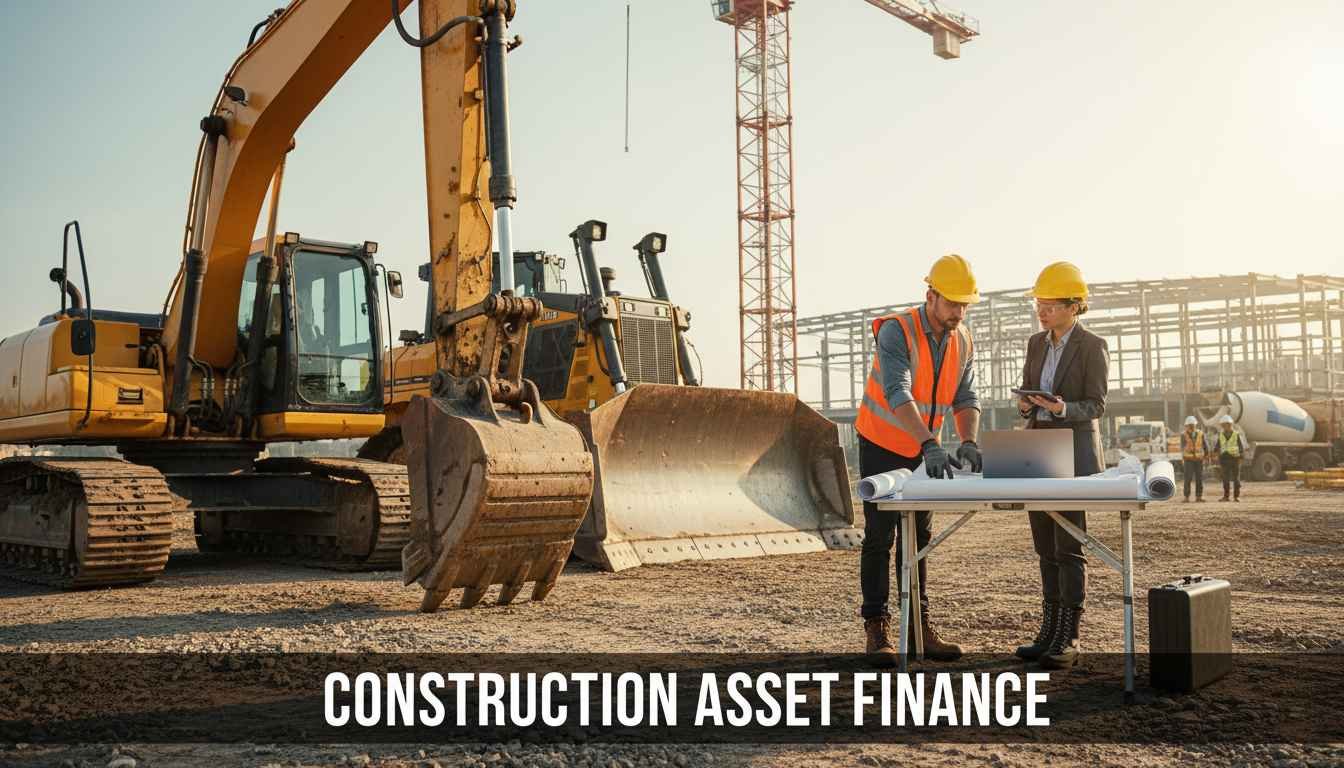
Don’t read this unless you’re prepared to rethink how your business approaches funding for construction machinery. For many companies, the cost of acquiring heavy equipment is one of the most significant hurdles to scaling operations. Yet, construction asset finance provides a structured way to access the machinery you need without draining cash reserves or stalling growth.
Construction asset finance isn’t just about borrowing money – it’s about strategically leveraging your assets to optimize cash flow. Whether it’s financing excavators, cranes, or specialized construction vehicles, the principle remains the same: you obtain the tools necessary for your projects while spreading the cost in a way that aligns with your operational revenue.
At its core, construction asset finance allows businesses to maintain liquidity while still investing in high-value assets. Many financial institutions, including MoneyMade, offer flexible packages tailored to your business profile, making it easier to secure the equipment without compromising financial stability.
Understanding How Construction Asset Finance Works
Construction asset finance typically falls into two categories: hire purchase and leasing. Hire purchase allows a company to own the asset at the end of the finance term after making fixed monthly payments. Leasing, by contrast, permits the use of the asset for a set period without ownership, often with the option to buy at the end.
Why does this matter? Because your choice impacts cash flow, tax treatment, and balance sheet presentation. For instance, leasing might offer tax benefits since payments can sometimes be classified as operating expenses rather than capital expenditures. Meanwhile, hire purchase can strengthen your asset base, improving your company’s valuation and borrowing capacity for future projects.
When I first set out to customize my truck, I had no idea that the world of high-riding freedom awaited me. Like many enthusiasts, I dreamed of elevating my vehicle with a lift kit, but I quickly learned that financing options can be daunting, especially for those of us who might not have perfect credit. In my quest for the best solutions, I stumbled upon some surprisingly accessible options, including lift kit financing no credit check services that transformed my approach. This experience not only opened doors to customization but also empowered me to embrace the adventurous side of truck ownership without the financial stress I originally anticipated. Join me as I share my journey and the insights I’ve gained along the way.
Benefits of Construction Asset Finance
1. Preserves Capital: Avoid tying up large amounts of cash in equipment purchases.
2. Flexible Payment Terms: Match repayments to project income cycles.
3. Access to Modern Equipment: Stay competitive with the latest machinery without upfront costs.
4. Potential Tax Advantages: Payments may be deductible depending on structure and jurisdiction.
5. Scalable Solutions: Finance multiple assets simultaneously to support rapid growth.
Troubleshooting Common Challenges
| Problem | Solution |
|---|---|
| High upfront cost of equipment | Use hire purchase or leasing to spread payments over time. |
| Limited access to financing | Partner with specialized asset finance providers who understand construction businesses. |
| Cash flow strain during low project periods | Negotiate flexible repayment schedules tied to project milestones or revenue cycles. |
| Asset depreciation impacting balance sheet | Consider leasing options to keep liabilities off the books while still using top-tier equipment. |
| Difficulty maintaining multiple assets | Bundle equipment financing with maintenance and insurance packages. |
Potential Drawbacks
Construction asset finance is not without risk. Monthly obligations remain even if projects are delayed or revenue falls short. Over-leveraging can compromise financial stability, and some agreements may include penalties for early repayment or equipment misuse. Businesses must carefully assess their financial projections and operational resilience before committing.
Who Should Avoid This?
Businesses with highly volatile cash flow, minimal credit history, or a preference for outright ownership of equipment may struggle under asset finance agreements. Similarly, companies entering short-term projects or seasonal operations could find monthly repayments burdensome during off-peak periods.
Optimizing Your Construction Asset Finance Strategy
1. Assess Your Needs: Prioritize equipment critical to immediate revenue generation.
2. Choose the Right Finance Type: Compare hire purchase versus leasing based on cash flow, tax implications, and ownership goals.
3. Negotiate Terms: Leverage multiple quotes to secure competitive rates and flexible repayment schedules.
4. Plan for Maintenance: Include service and insurance to avoid unexpected operational downtime.
5. Review Regularly: Reassess equipment performance and financial impact annually to optimize investment.
The Why Behind the How
Asset finance is more than a funding solution; it’s a strategic tool. Companies that understand the interplay between asset acquisition, operational efficiency, and financial planning gain a significant competitive advantage. Access to modern machinery boosts productivity, reduces project timelines, and allows bidding on larger, higher-margin contracts – ultimately creating a measurable impact on profitability and long-term sustainability.
Conclusion
Construction asset finance is a pathway to growth for companies ready to invest smartly in their operations. By carefully selecting finance structures, aligning repayments with project revenue, and understanding potential risks, businesses can scale without sacrificing financial stability. Whether opting for hire purchase or leasing, the ultimate goal remains the same: access the tools that empower your business to thrive in a competitive construction landscape.