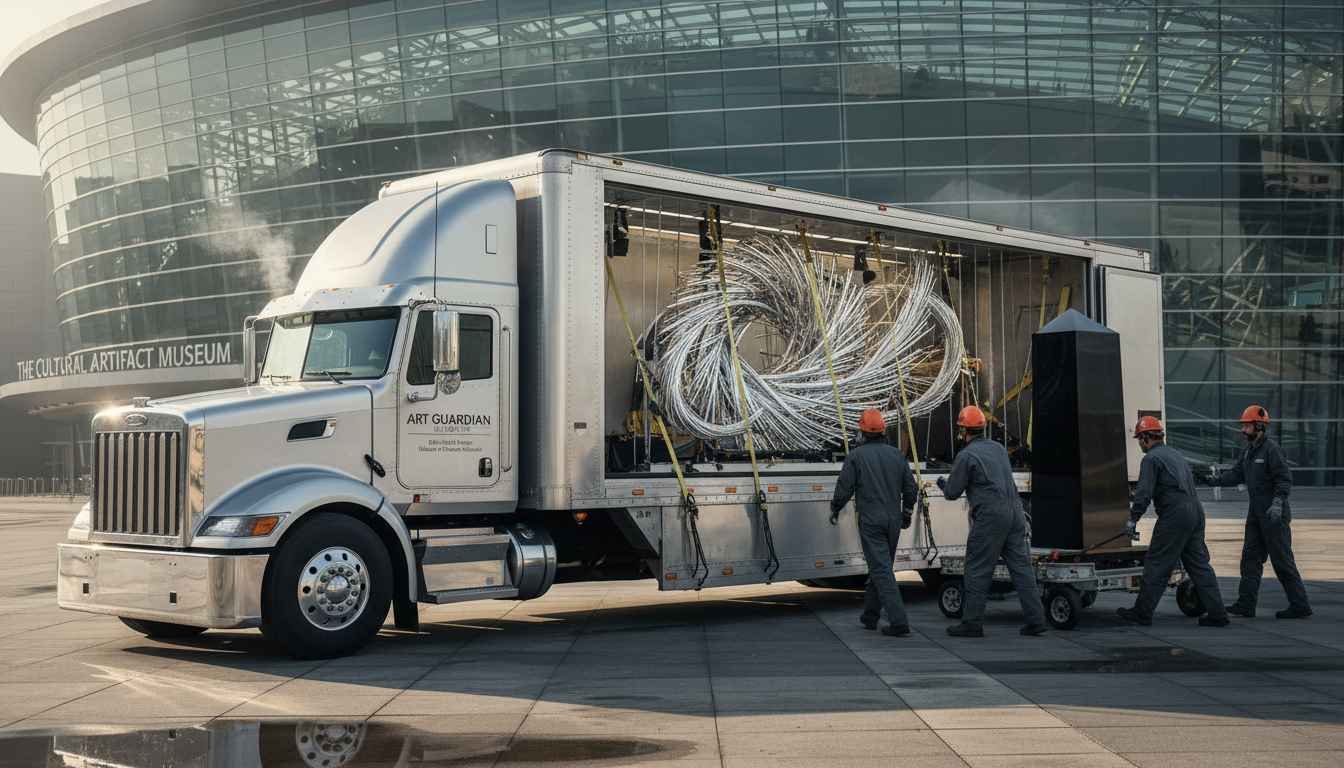
Think of moving an exhibit like driving a classic car across the country. Each piece must be carefully packed, routed, and monitored to ensure it arrives safely, just as a prized vehicle requires meticulous handling on the open road. Exhibit transport in the modern era combines logistics, security, and timing to bring artifacts, art, and displays from one venue to another without incident.
Timeline of Key Events in Exhibit Transport
Early 1900s – Horse-Drawn Carriages: Museums and collectors relied on horse-drawn wagons to move small-scale exhibits. Fragility and distance limited the scale and frequency of transport.
1920s–1950s – Motorized Vehicles: The introduction of trucks and vans revolutionized exhibit transport. Artifacts could travel longer distances with more protection, though cushioning and stabilization techniques were still rudimentary.
1960s–1980s – Specialized Crating and Air Freight: As international exhibitions grew in popularity, custom crates, shock-absorbing materials, and temperature-controlled shipping became standard. Airlines began offering specialized freight services for delicate exhibits.
1990s–2000s – Tracking and Security: Digital tracking, GPS, and advanced security protocols were introduced. Museums could monitor shipments in real time, reducing the risk of loss or damage.
2010s–Present – Integrated Logistics: Modern exhibit transport combines climate control, GPS tracking, custom crating, and professional handling. Companies now offer end-to-end solutions, including installation, insurance, and regulatory compliance. NC By Train also highlights regional options that make exhibits accessible to a wider audience while maintaining safety and efficiency.
Time & Cost
Typical exhibit transport projects range from 2–7 days for domestic moves and up to 3–4 weeks internationally. Costs vary by size, fragility, distance, and level of service, with budgets starting around $1,500 for small, local shipments and scaling to $50,000+ for international, high-value exhibitions.
Potential Drawbacks
Exhibit transport is not without risks. Items may be damaged despite precautions, costs can escalate quickly, and delays due to customs or weather are possible. Small institutions may find the process logistically overwhelming or financially impractical. For some, local replication or virtual exhibits could be safer alternatives.
Understanding the evolution and best practices of exhibit transport allows organizations to plan effectively, safeguard their collections, and ensure a seamless visitor experience at every destination.