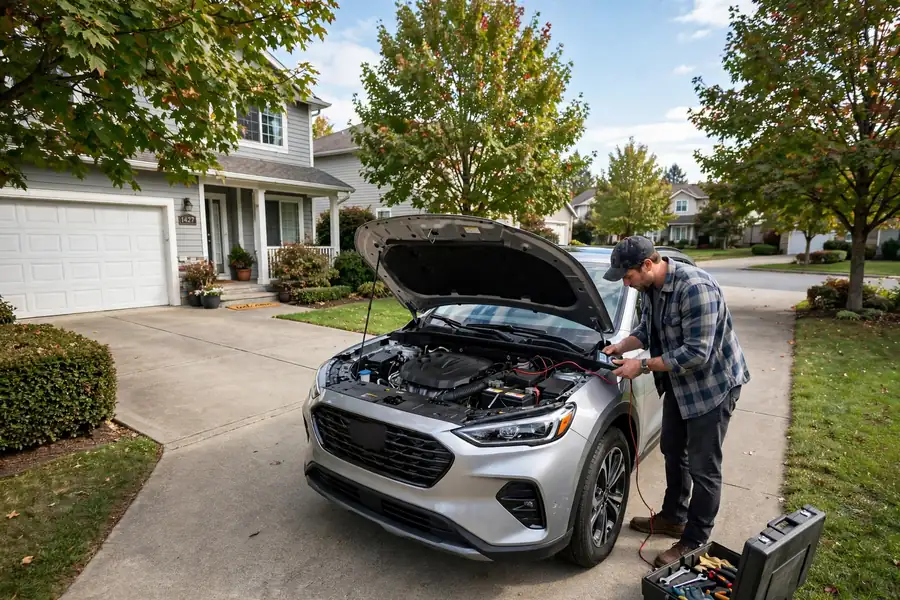
Most expensive car repairs start as small, cheap problems that nobody noticed. A low oil level, a soft tyre or a weak battery rarely announces itself until it becomes a breakdown — usually at the least convenient moment. A simple car maintenance checklist for beginners changes that. You do not need mechanical experience or a garage full of tools: you need about twenty minutes once a month, a few basic checks and the habit of actually doing them. This guide walks through every check in plain language, in the order you would do them standing next to your car.
Engine oil: the two-minute check that protects your engine
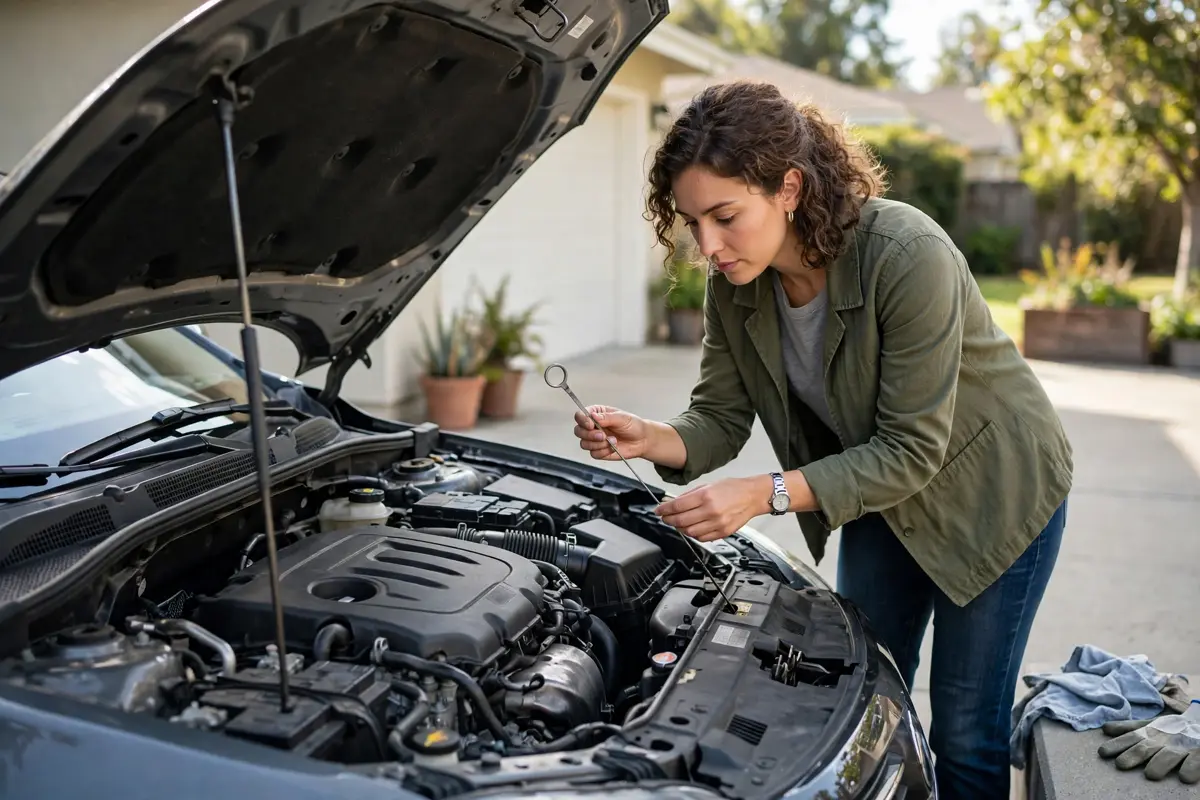
Oil is the single most important item on any car maintenance checklist for beginners, because running an engine low on oil can destroy it. Park on level ground, wait a few minutes after switching off, then pull the dipstick, wipe it, push it fully back in and pull it out again. The oil film should sit between the minimum and maximum marks. If it is near the bottom, top up with the grade of oil listed in your owner’s manual, a little at a time. Look at the colour too: healthy oil is amber to dark brown, while gritty, milky or metallic-looking oil is a reason to book a service rather than just top up.
Tyres: pressure, tread and the spare
Tyres affect fuel economy, braking distance and safety, and they lose pressure gradually even without a puncture. Check pressures monthly with an inexpensive gauge, using the figures on the sticker inside the driver’s door frame or fuel flap — not the number printed on the tyre itself. Under-inflated tyres wear their edges, waste fuel and run hot; over-inflated ones shrink your grip. While you are down there, run your eyes over the tread and sidewalls. The legal minimum tread depth in most places is 1.6mm, but grip in the wet falls away well before that, so treat 3mm as your planning point. Finally, check the spare or the inflation kit: a flat spare discovered at the roadside helps nobody.
Fluids: coolant, brake fluid, screen wash and power steering
Modern engine bays make most fluids easy to check through translucent reservoirs with minimum and maximum lines. Coolant should sit between the marks when the engine is cold — never open a pressurised coolant cap on a hot engine. Brake fluid should also sit between its marks; if it is dropping, that is a job for a mechanic, not a top-up habit, because it can signal worn brakes or a leak. Screen wash is the one fluid every beginner can top up confidently: keep it full, and use a proper screen-wash mix in winter so it does not freeze. If your car has a power-steering reservoir, a quick glance completes the set. Keeping these basics right matters even more before a long drive — the same habit that serves travellers in our guide to planning long, optimised journeys applies just as well to a family road trip.
Lights, wipers and the battery
Walk around the car with the lights on and check headlights, indicators, brake lights (ask someone to watch, or reverse up to a wall and use the reflection) and the number-plate light. A blown bulb is cheap; being invisible on a dark road is not. Lift the wiper blades and feel the rubber edge: if it is cracked, split or leaves streaks, replace the blades before the rainy season finds the fault for you. For the battery, look for white or green crusty corrosion on the terminals and make sure the clamps are tight. If your engine has been turning over slowly on cold mornings, have the battery tested — most parts stores will do this free, and a planned replacement beats a dead car on a workday morning.
Brakes, belts and warning signs you should never ignore
You cannot inspect brakes fully without removing a wheel, but you can listen and feel. Squealing, grinding, a pedal that feels spongy or a car that pulls to one side under braking all mean the same thing: book a professional inspection soon, not at the next service. Under the bonnet, glance at the visible rubber belts for cracks or fraying. And learn your dashboard: an oil-pressure or temperature warning light means stop as soon as it is safe and switch off, while most other warnings mean get the car checked promptly. Treating small warnings early is the whole philosophy behind this checklist — the same thinking behind understanding the rules before you travel, as in our guide to the legal drinking age in Rome for visitors who like to be prepared.
What to keep in the boot for small emergencies
A monthly checklist prevents most problems, but a small emergency kit covers the rest. Keep a tyre-pressure gauge, a torch, jump leads or a compact jump starter, a bottle of the correct engine oil, disposable gloves and a cloth for dipstick checks in the boot. Add a warning triangle and a high-visibility vest where the law or common sense requires them, plus a phone charger. None of this is expensive, all of it fits in a small box, and every item earns its space the first time you need it on a dark, wet evening.
Making the checklist a monthly habit
The best checklist is the one you actually follow. Pick a fixed trigger — the first Saturday of the month, or the day you refuel at the start of the month — and run through oil, tyres, fluids, lights and wipers in one pass. Write the date and anything you topped up in your phone’s notes; a simple record helps you spot slow changes, like oil use creeping up, before they become expensive. Twenty minutes a month will not make you a mechanic, but it will catch the majority of problems while they are still cheap, keep your car safer and more economical, and give you confidence that the machine you rely on every day is being looked after. That is exactly what a good car maintenance checklist for beginners is for.