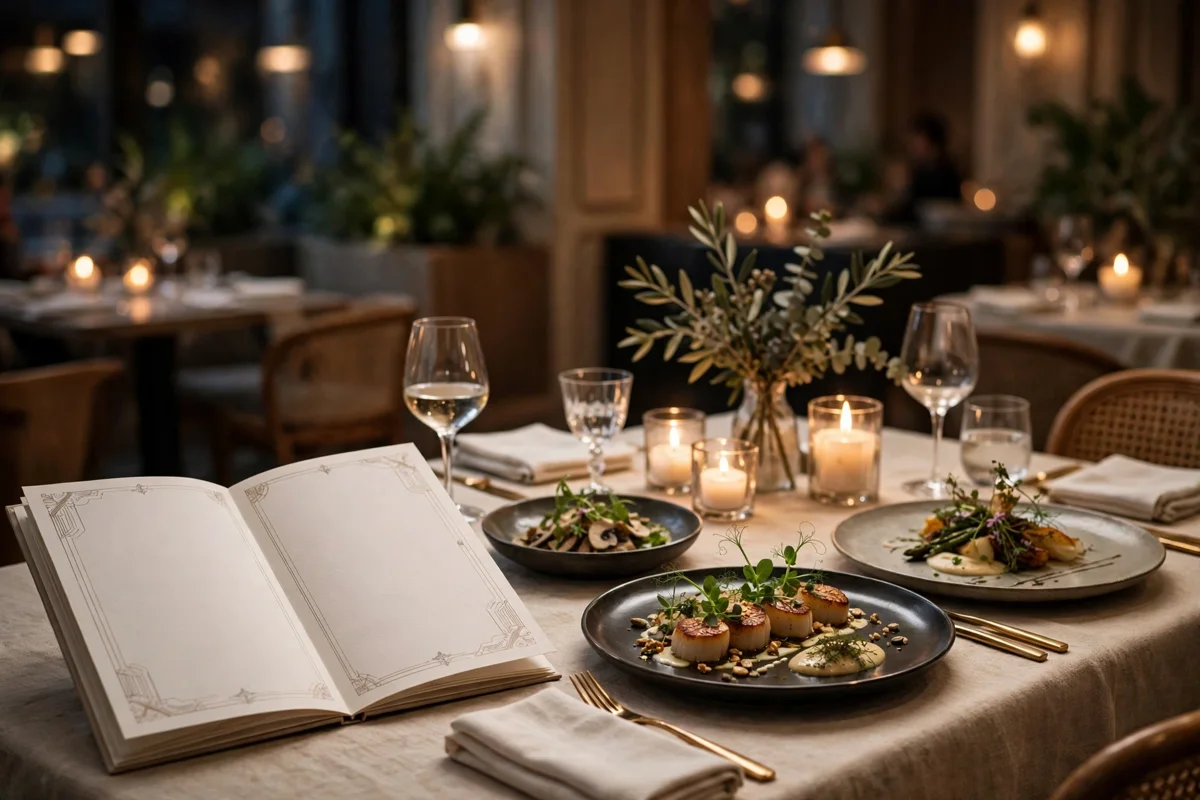
A good menu is a small piece of persuasion. It has a structure, a vocabulary and a few quiet tricks designed to steer your eye and your appetite before a dish is even described. Learning how to read a restaurant menu turns ordering from a guess into a decision: you spot the kitchen’s real strengths, decode the terms that inflate prices, and leave having eaten the meal the restaurant cooks best rather than the one it advertises hardest.
Start With the Shape of the Menu
Before reading a single dish, look at the menu’s architecture. A short menu usually signals a kitchen cooking a focused list of dishes well, often with fresher ingredients turning over quickly. A very long menu is not automatically bad, but it asks a fair question about how one kitchen excels at forty things. Notice where your eye lands first: restaurants place high-margin items in the upper-right of a page and at the start or end of a list, because readers remember firsts and lasts. Knowing the layout exists is enough to free your choice from it.
Decode the Vocabulary
Menu language has a code. Words like “artisan”, “rustic” and “gourmet” describe feelings, not ingredients, and often decorate ordinary dishes. Specific words carry real information: a named farm, a cut, a cooking method, a region. “Line-caught”, “dry-aged” and “wood-fired” describe verifiable processes, while “chef’s special” and “house favourite” describe marketing. Sauces and accompaniments reveal the kitchen’s ambition too: a dish built around one clear flavour idea usually eats better than a plate listing nine competing ones. When a term is genuinely unfamiliar, ask; good servers treat the question as a compliment to the kitchen. Menus are not the only food documents written in code, either; anyone who has worked through specialist dietary guidance, such as our precise guide to snacks for autistic kids, will recognise the same skill of separating meaningful specifics from reassuring filler.
How to Read a Restaurant Menu by Course
Starters tell you how the kitchen seasons. If the small plates sound balanced and confident, the mains usually follow. Mains reveal priorities: a short grill section with clear cuts suggests confidence in sourcing, while a long list of everything suggests a freezer doing heavy lifting. Sides are the honest section nobody photographs; well-considered sides, seasonal vegetables treated with care, a proper salad, mark a kitchen that respects the whole plate. Desserts made in-house are usually announced proudly; if the list reads like a wholesaler’s catalogue, coffee may be the wiser finish.
Prices Are Information, Not Just Cost
The price spread of a menu is a map of what the restaurant wants to sell. The most expensive dish often exists to make the second most expensive feel reasonable, a comparison effect every menu designer knows. The cheapest main is rarely the kitchen’s pride. Look instead for the dish priced confidently in the middle whose description is the most specific on the page; that is frequently the plate the chef would order. Set menus and prix fixe formats deserve attention too: they usually showcase the kitchen’s strongest dishes at its best value, because the restaurant controls the whole sequence.
Match the Menu to the Occasion
How to read a restaurant menu also depends on why you are there. A business dinner rewards a menu with quiet, unfussy dishes that arrive predictably and let conversation lead. A celebration justifies the theatrical dish the kitchen is famous for. A first visit calls for the signature: every serious restaurant has one plate that regulars would riot over losing, and asking your server what it is remains the single highest-value question in dining. Regulars read menus the way editors read drafts, looking for what changed, because seasonal changes are where a living kitchen shows its hand.
Questions That Unlock the Kitchen
Three questions separate a good order from a great one. What is the kitchen proudest of tonight? What arrived fresh today? What do regulars order that visitors miss? Each invites the server to step out of the script and into genuine knowledge. Combined with the vocabulary and layout skills above, they turn any menu, from a laminated cafe card to a leather-bound tasting list, into a document you can actually use.
Reading Menus When You Travel
Abroad, menu reading becomes a travel skill in its own right. Translated menus compress nuance, and the dish a kitchen is proudest of may hide behind the plainest line. Look for the item locals order, the regional speciality named without decoration, and the dish that appears on no other menu in town. Travellers planning a route from our guide to the New York Times must-visit places will eat in unfamiliar cities for days at a stretch, and the confidence to decode a foreign menu, spot the house signature and ask one good question is worth as much as any restaurant reservation.
The Bottom Line
Learning how to read a restaurant menu is a small skill with an outsized reward: better meals, chosen deliberately, at every price level. Read the shape before the dishes, trust specifics over adjectives, let prices inform rather than intimidate, and always ask what the kitchen loves cooking. The menu stops being a sales pitch and becomes what it should have been all along, a guide written by the people feeding you.
A Note on Dietary Notes and Allergies
Modern menus increasingly carry symbols and footnotes for allergens, spice levels and dietary suitability, and reading them properly matters more than any other skill in this guide. Symbols vary between restaurants and countries, so the legend at the top or bottom of the menu is essential reading, not decoration. When a symbol is ambiguous, ask before ordering rather than after the plate lands; kitchens would always rather clarify a symbol than remake a dish, and a confident question protects everyone at the table.