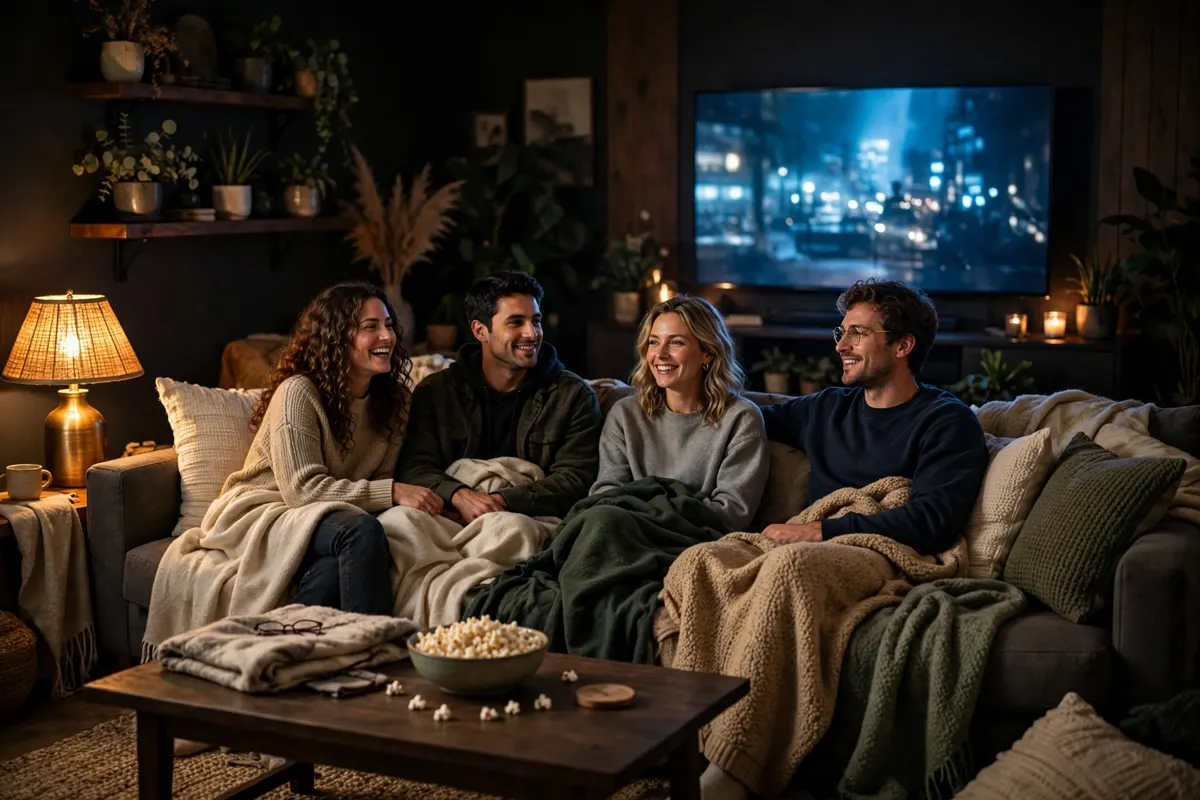
The difference between a forgettable evening on the sofa and a great movie night at home is rarely the film. It is the small decisions around it: what you watch, where everyone sits, when the snacks arrive and whether the lights make the room feel like a cinema or a waiting room. Plan those details once and a movie night at home becomes the easiest social ritual you own, cheap, repeatable and genuinely looked forward to.
Choose the Film Before the Evening Starts
More movie nights die in the browsing menu than anywhere else. Decide the film in advance, or narrow it to a shortlist of three with a named person holding the final vote. Match the choice to the audience rather than to taste alone: a mixed group rewards a widely loved crowd-pleaser, a family night needs the youngest viewer’s limits respected, and a double feature works only when the first film is the lighter one. Announcing the title beforehand builds anticipation and, usefully, gives everyone time to object before the lights go down.
Set the Room Like You Mean It
Cinemas control three things: darkness, sound and sightlines. Recreate them cheaply. Dim or switch off overhead lights and use one warm lamp behind the seating if total darkness feels stark. Move the sofa or chairs so every seat faces the screen squarely, and add cushions and blankets until the seating feels claimed rather than arranged. Sound matters more than screen size: a basic soundbar or even a decent Bluetooth speaker placed near the television lifts dialogue clarity enormously. The furniture around the screen deserves the same attention; our entertainment unit decor ideas show how to style the viewing wall so the room looks deliberate with the screen off, and our guide to finding the best home decor stores helps source the cushions, throws and lamps that finish the job. Phones go face down in another room, with one agreed exception for genuine emergencies.
Snacks Are a Schedule, Not a Bowl
The classic mistake is putting everything out at once. Stagger the food like a cinema would: something salty and simple for the opening, the main event snack at the halfway point, and something sweet near the end. Popcorn remains undefeated because it is warm, shareable and easy to season two ways for different tastes. Drinks deserve the same thought: a small, cold selection beats a warm litre bottle passed around, and a glass of water per person prevents the mid-film kitchen expedition that breaks the spell.
Movie Night at Home for Families
With children, start earlier than feels natural and let them build the ritual: tickets drawn on paper, a cushion fort in front of the sofa, a vote between two pre-approved films. Keep the running time honest for the youngest viewer’s bedtime, and put the intermission where a long film naturally breathes. The ritual is the point; children remember the fort and the tickets long after they forget the plot, and a family movie night at home done this way becomes a tradition they ask for by name.
Themes, Double Features and Guest Nights
A theme turns a good evening into an event without costing anything. Pair the film with its country of origin at dinner, run a director’s two best films back to back, or let each guest in rotation choose the next week’s title. For guest nights, seat comfort and a start time that respects the last train home matter more than an ambitious programme. Keep a short list of proven crowd-pleasers for the nights when nobody wants to gamble on something new.
Troubleshooting the Usual Problems
Buffering ruins more evenings than bad films do, so start the stream or download before guests arrive and test the first two minutes. If the group cannot agree, rotate the choice by week and honour the rotation absolutely; fairness ends arguments that taste never will. If attention drifts, the film is usually too long for the night rather than too dull, so keep weeknight choices tight and save the epics for weekends.
Small Upgrades That Change the Evening
Once the ritual exists, tiny upgrades compound. A pre-show playlist while people arrive turns waiting into atmosphere. A standing start time, the same evening each week or month, removes the negotiation that quietly cancels plans. A shared list on the fridge where anyone can nominate future films spreads ownership of the choice. And pairing the film with a proper meal beforehand, cooked from a menu you chose as carefully as the movie, turns the whole evening into an occasion; learning how to read a restaurant menu is the companion skill for the nights you decide to eat out first instead.
The Bottom Line
A great movie night at home is a designed evening, not an accidental one: the film chosen early, the room set with intent, snacks on a schedule and phones out of reach. None of it requires money, only the decision to treat a night in with the same care you would give a night out. Make it a ritual and it will quietly become the plan everyone protects.
Keeping a Running List for Future Nights
The easiest upgrade of all costs nothing: keep a shared list of films everyone wants to see, added to whenever a trailer, a review or a friend’s recommendation sparks interest. A stocked list ends the blank-screen debate before it starts, because choosing from ten wanted films is a pleasure while searching a catalogue of thousands is a chore. Cross films off as you watch them and note a one-line verdict; within a few months the list becomes a small archive of your group’s taste, and planning the next movie night at home takes minutes instead of half the evening.