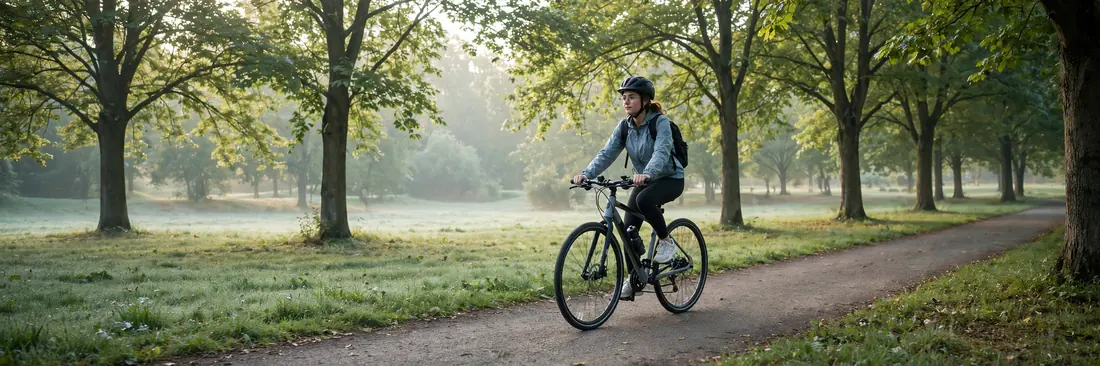
Of all the ways to get fitter, cycling might be the friendliest: it is gentle on your joints, doubles as transport, and scales from a gentle park loop to a genuine workout without any new skills. Cycling for beginners does not require Lycra, an expensive bike or heroic fitness — it requires a bike that fits, a few safety basics and a sensible first month. This guide covers choosing and setting up your first bike, the essential kit, how to build distance without burning out, and the mistakes that put new riders off just as it starts getting fun.
Choosing Your First Bike
For most beginners, a hybrid bike is the right answer: upright position, medium-width tyres, simple gears, and happy on roads, cycle paths and light gravel. Road bikes are faster but less forgiving; mountain bikes are tougher but slower on tarmac. Buy the correct size before anything else — you should be able to stand over the frame with clearance, and reach the brakes comfortably. A second-hand hybrid from a bike shop (checked and serviced) is often better value than a new bargain-basement bike, whose heavy frame and unreliable gears discourage exactly the habit you are trying to build.
Set-Up: Five Adjustments That Change Everything
- Saddle height — your knee should keep a slight bend at the bottom of the pedal stroke. Too low is the most common beginner error and the fastest route to sore knees.
- Tyre pressure — printed on the tyre sidewall; check weekly. Soft tyres feel sluggish and puncture easily.
- Brakes — you should stop firmly without the levers touching the bars.
- Chain — clean and lightly oiled; a dry chain wastes your energy.
- Fit check — if your hands, neck or back ache after short rides, a basic shop fit is money well spent.
The Kit That Actually Matters
A helmet is non-negotiable. After that: a lock if you will ever leave the bike, lights if you might ride at dawn or dusk, a pump, a spare tube and tyre levers, and a water bottle. Padded shorts sound like a joke purchase until your third ride, when they suddenly seem essential. Everything else — computers, clipless pedals, special clothing — can wait until you know you are hooked. Riders building a wider fitness base often pair cycling with the plans in our beginner’s running plan; the two sports support each other remarkably well.
Your First Month: Building the Habit
Ride three times a week, shorter than you think you should. Start with 20–30 minutes on flat, quiet routes and add roughly ten minutes per ride each week. Keep the effort conversational — if you cannot speak in short sentences, slow down. One ride a week can be slightly longer or include a gentle hill. Rest days are when fitness actually happens, so take them, and support the habit with simple strength work like the routines in our strength training for beginners guide — strong legs and a stable core make hills feel half as steep. Anchoring rides to your mornings, as described in our morning routine guide, is the trick most new cyclists credit for making it stick.
Eating and Drinking on the Bike
New riders are often surprised by how much difference fuel makes. Eat normally before a ride — a light meal an hour or two ahead — and drink regularly rather than waiting until you are thirsty; by then you are already behind. For rides under an hour, water is all you need. Beyond that, carry something simple to eat: a banana, a flapjack, anything you can manage with one hand and a clear conscience. The mid-ride slump beginners blame on fitness is very often just an empty tank, and it disappears entirely once eating and drinking become part of the routine rather than an afterthought.
Road Skills and Staying Safe
Ride predictably: straight lines, clear signals, no sudden swerves. Position yourself where drivers can see you — not in the gutter — and assume car doors open and junctions hide surprises. Make eye contact with drivers at side roads. In traffic, confidence is safety: hesitate less, signal earlier. Learn two repairs before you need them — fixing a puncture and reseating a dropped chain — and practise both once at home, where it is warm and unhurried.
Where to Ride
Begin on cycle paths, park loops and quiet residential streets, then graduate to longer routes as your confidence grows. Weekend rides are where cycling turns from exercise into pleasure — plan a café-stop loop using the approach in our budget-friendly weekend getaway guide, and pack for it with the minimalist mindset of our guide to packing light. Many beginners are surprised how quickly a “long ride” becomes the best part of the week.
Mistakes That Put Beginners Off
The classics: a saddle set too low, rides that start too hard and end in dread, no rest days, and comparing yourself to riders with five years in their legs. Add one more to the list — riding the same short loop forever. Variety keeps the habit alive: a new route, a different time of day, or a destination with a reason to stop all turn exercise into an outing. When a ride feels like somewhere you are going rather than something you are doing, motivation stops being a problem you have to solve. Avoid those, track nothing but time and how the ride felt, and give it a month. Cycling for beginners works because it sneaks fitness into transport, errands and weekends out — by the time it feels like training, you are already a cyclist.